

Details
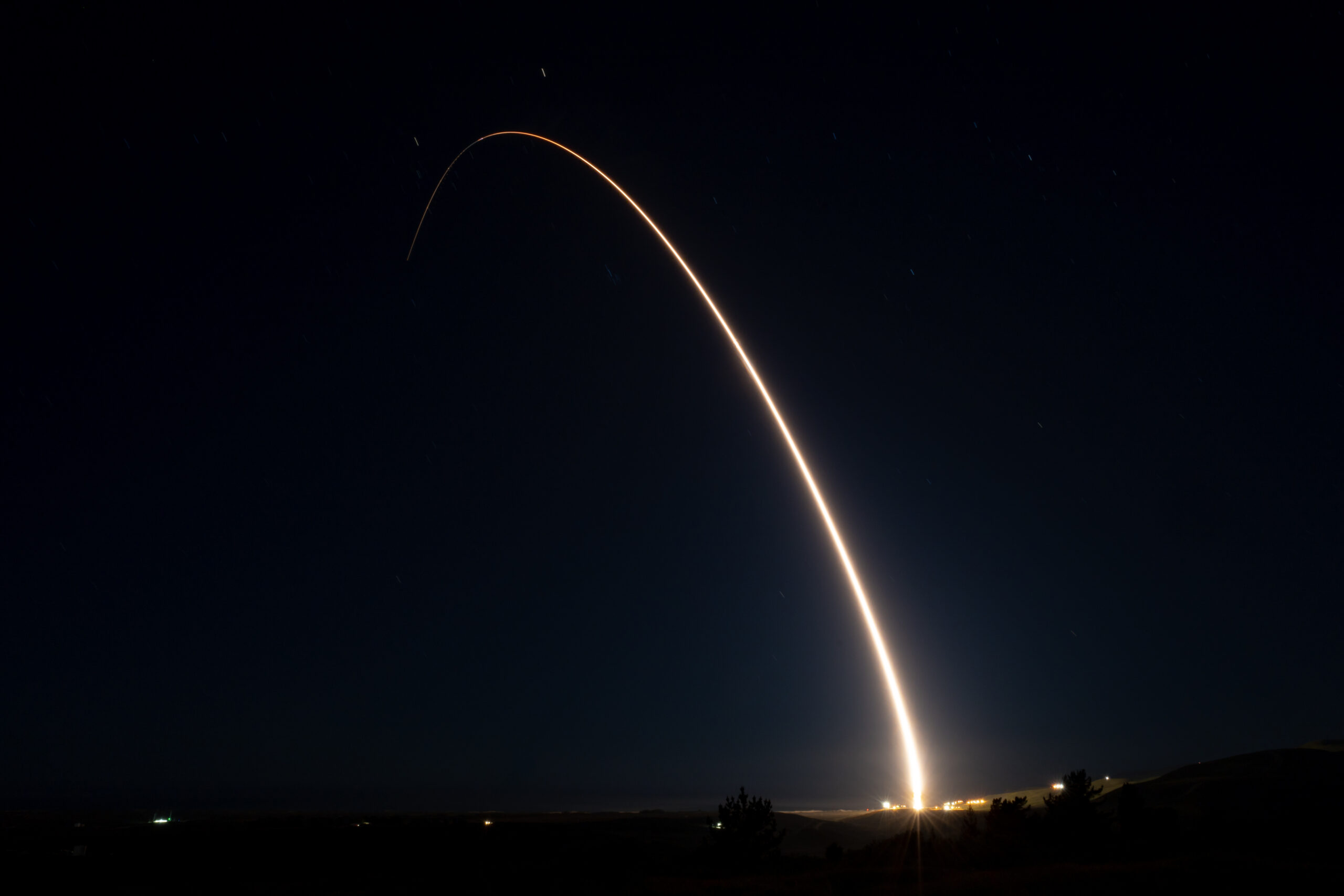
From hypersonic weapons to AI‑driven decision systems, today’s national security environment demands unprecedented levels of technical innovation and system‑of‑systems integration. This seminar explores the engineering challenges shaping the next generation of deterrence capabilities. Drawing on decades of lessons learned in missile system development and deployment, we’ll examine the hurdles—both technical and operational—in synchronizing advanced technologies, enhancing reliability, and ensuring readiness in an era defined by speed, complexity, and emerging threats.
Speakers

Host of Huessy Seminars, Mr. Peter Huessy is President of his own defense consulting firm, Geostrategic Analysis, founded in 1981, and from 2021-3, Senior Fellow at the Hudson Institute. From 1981-1992, he was also the National Security Fellow at the AFPC, IFPA and JINSA. He was then the senior defense consultant at the National Defense University Foundation for 22 years during which he hosted over 750 national security seminars and public policy events. And from 2013-2021 he directed similar public policy outreach with the Air Force Association on nuclear, missile defense and space policy.
Mr. Huessy has served as an expert defense and national security analyst for over 50 years, helping his clients cover congressional activities, arms control group efforts, nuclear armed states actions, and US administration nuclear related policy, budgets, and strategies, while monitoring budget and policy developments on nuclear deterrence, ICBM modernization, missile defense, space, nuclear arms control, and overall nuclear modernization.
He also analyzes the nuclear activities of North Korea, China, and Iran. This also includes monitoring activities of think tanks, non-governmental organizations, and other US government departments, as well as projecting future actions of Congress in this area. His specialty is developing and implementing public policy campaigns to secure support for important national security objectives. And analyzing nuclear related technology and its impact on public policy, including a study of which he prepared for the Aerospace Corporation in 2019. He contributed to a NIDS nuclear policy book in 2023, and for over 40 years has authored a weekly nuclear report “The ICBM Ear.”
Laura McGill

As the Director of Sandia National Laboratories, Laura McGill provides leadership and management direction for the premier U.S. engineering laboratory, responsible for a $5+B portfolio of mission critical programs.
Before her appointment as Labs Director on May 1, 2025, Laura served as Deputy Laboratories Director for Nuclear Deterrence and Chief Technology Officer since
January 2021. In that role, she was responsible for ensuring the safety, security, reliability, effectiveness and modernization of the U.S. nuclear stockpile.
Laura has worked in the defense industry for more than four decades.
Before joining Sandia, Laura was deputy vice president of engineering at Raytheon Missiles & Defense, a Raytheon Technologies business with 30,000 employees.
Before that, she was vice president of engineering for Raytheon Missile Systems, leading an organization of 7,800 engineers and scientists. Prior to vice president, Laura was chief engineer for the $2 billion Air Warfare Systems program portfolio, which included Tomahawk cruise missiles, air-to-air combat systems and precision strike weapons. She was previously chief engineer for the Tomahawk Cruise Missile.
In 2019, Laura was inducted into the National Academy of Engineering. She is a Lifetime Fellow of the American Institute of Aeronautics and Astronautics and served as president from 2022 to 2024.
| Dynamic Parity | Workforce Development | Our Podcasts | Our Education | |
|---|---|---|---|---|
 |
 |
 |
 |
|
| Video Series | Global Security Review | |||
 |
 |

